English



Automatic labeling can significantly improve production efficiency, but wrinkles can appear when the label, container, adhesive, and labeling machine are not properly matched.
A label may look perfectly flat before application but develop wrinkles, bubbles, or raised edges after passing through the labeling machine. These problems not only affect the appearance of the product but can also lead to poor adhesion and label lifting.
So, why do labels wrinkle during automatic labeling?
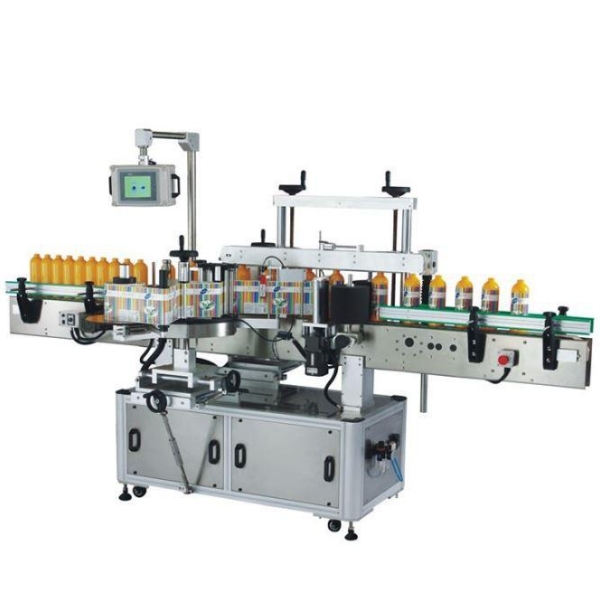
Here are seven common causes and practical ways to prevent them.
Bottle shape is one of the first factors to consider.
Round and smooth bottles are generally easier to label than tapered, curved, oval, or irregularly shaped containers. When a flat label is applied around a surface that changes direction, the label may not conform smoothly to the container.
Deep curves, shoulders, grooves, or recessed areas can create tension in the label and result in wrinkles.
Before choosing the label construction, provide your label supplier with the actual bottle or accurate bottle dimensions. The label size and material can then be evaluated according to the container geometry.
For unusual bottle shapes, it may also be necessary to adjust the label dimensions or use a more flexible face material.
The face material has a direct effect on how easily a label conforms to a container.
A material that works well on a flat surface may not perform equally well on a curved or tapered bottle.
For example, film materials such as BOPP, PET, PE, and other synthetic materials have different levels of flexibility and stiffness. Choosing the material only according to appearance or price can create application problems later.
Consider:
The best label material is not necessarily the thickest or strongest one. It should be compatible with the actual application conditions.
Automatic labeling machines feed labels at high speed. If the label web tension is too high, too low, or inconsistent, the label may not be dispensed smoothly.
Excessive tension can cause the label to deform as it leaves the liner or contacts the bottle. Incorrect speed synchronization between the conveyor and label dispensing system can also cause positioning and wrinkle problems.
Label application troubleshooting guides commonly identify web tension, dispensing, and machine setup as important factors in application performance.
Check:
The machine should be adjusted according to the actual label specification rather than using the same settings for every label.
After the label contacts the bottle, the pressure roller or wipe-down system needs to press the label evenly against the surface.
If the pressure is uneven, one part of the label may adhere before another part. This can trap air or create tension, resulting in wrinkles or bubbles.
This problem can become more noticeable with curved or tapered bottles.
Check whether:
Even a well-designed label can have difficulty bonding to a contaminated surface.
Dust, oil, grease, moisture, product residue, or condensation can interfere with adhesive contact.
This is particularly important for food and beverage packaging, where bottles may be exposed to oil, water, sauces, refrigeration, or condensation.
A clean and dry application surface is therefore essential for consistent labeling.
Before labeling:
Choosing the right face material is only half of the solution.
The adhesive also needs to match:
For example, glass, PET, PP, and HDPE surfaces can behave differently during adhesive application.
A label construction that performs well on a smooth glass bottle may require a different adhesive when applied to a plastic or squeezable container.
Test the actual combination of:
Label material + adhesive + container + application conditions
before starting mass production.
Automatic labeling machines are sensitive to roll specifications.
Problems may occur when the label roll has unsuitable:
Incorrect specifications can affect label feeding and positioning, which may eventually result in wrinkles or misalignment.
Before production, confirm the labeling machine requirements with your label supplier.
Important information includes:
A reliable labeling result depends on more than the printing process.
Before production, check these five areas:
1. Container
Shape, material, curvature, and surface condition.
2. Label material
Flexibility, thickness, surface finish, and durability.
3. Adhesive
Adhesion to the specific container and resistance to the application environment.
4. Label construction
Label size, die-cutting, liner, roll direction, and winding specifications.
5. Labeling machine
Speed, tension, pressure, positioning, and dispensing settings.
The best approach is to test the complete label construction on the actual container and labeling equipment before mass production.
Label wrinkling during automatic labeling is rarely caused by just one factor. It is usually the result of a mismatch between the label, adhesive, container, and application process.
If your labels are wrinkling during automatic application, changing the material immediately may not solve the problem. First identify whether the issue comes from the bottle shape, label construction, adhesive, roll specification, or machine settings.
At Jinke Label, we can evaluate your bottle type, label dimensions, material requirements, and application method to recommend a suitable label construction for your project.
Have a labeling problem? Send us your bottle specifications and label requirements, and we can help you identify a suitable solution.
 +86 15805927008+86 15805928278
 Sales Executivelinda@jinkelabel.comSales Executiverosa@jinkelabel.comGeneral managerzane@jinkelabel.com
 No.99 Tongfu Road, Tongan district, Xiamen, China.

Our hours
Monday-Saturday: 8:00am-18:00pm