English



Sauce and condiment packaging may look simple, but labels used on these products often face demanding conditions.
Hot sauce, BBQ sauce, chili sauce, ketchup, mayonnaise, salad dressing, and other condiments can expose labels to oil, water, sauce residue, refrigeration, condensation, repeated handling, and temperature changes.
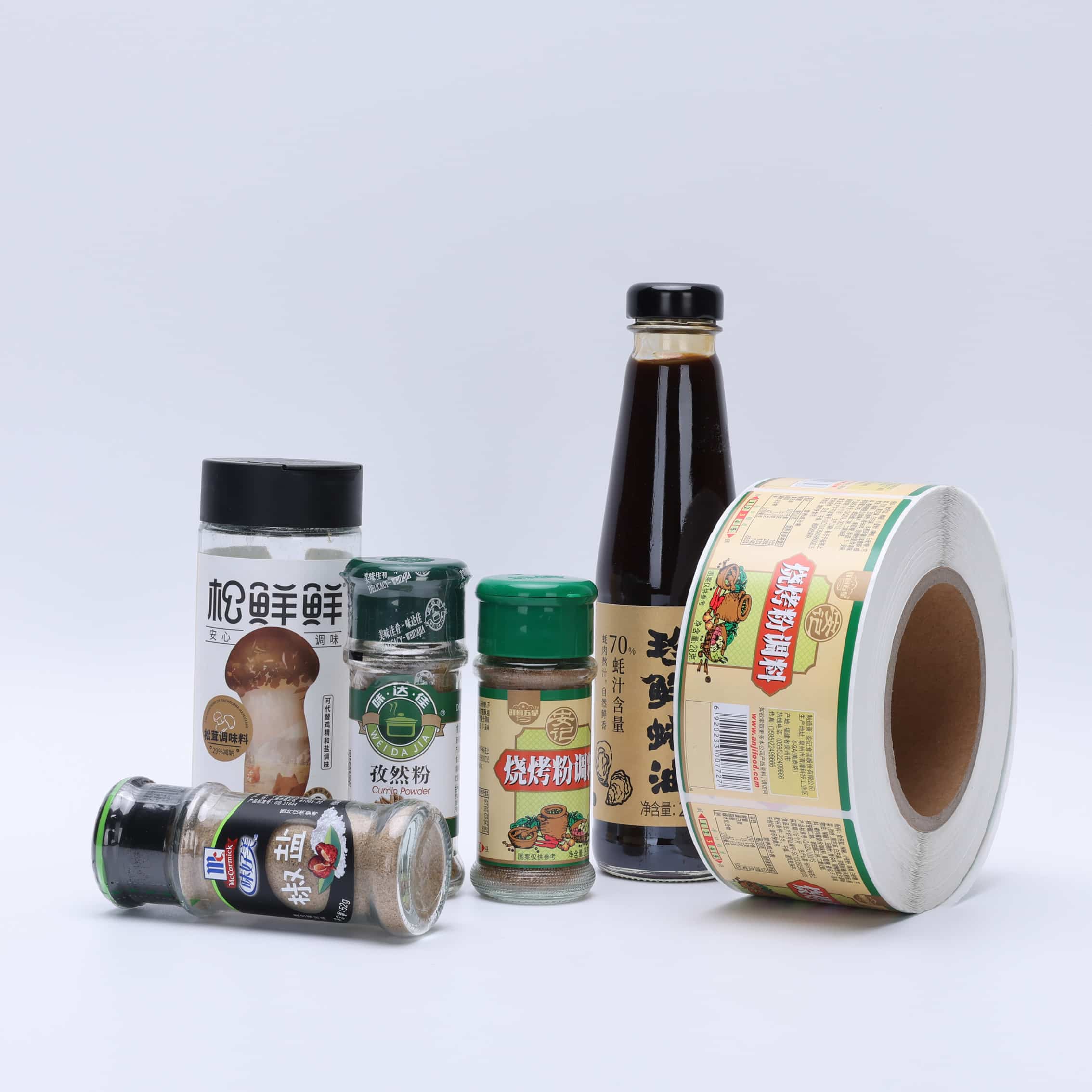
A label that looks good when it leaves the printing factory may not perform well after weeks of storage or repeated use.
So how should you choose the right label for sauce and condiment bottles?
Here are the key factors to consider.
The first step is to identify what the label will be applied to.
Common sauce and condiment containers include:
Different surfaces have different adhesion characteristics.
For example, a smooth glass bottle and a flexible plastic squeeze bottle may require completely different label constructions.
The same label material and adhesive should not automatically be used for every bottle.
Many sauces are stored in refrigerators or handled in kitchens where bottles can become wet.
Condensation can form when a cold bottle is exposed to warmer air. Water on the bottle surface can make label application and long-term adhesion more challenging.
For products that will frequently encounter moisture, film-based materials such as BOPP can be considered because they provide good resistance to water compared with conventional paper materials. Industry suppliers commonly recommend waterproof film constructions for sauce and condiment applications.
However, the adhesive still needs to be selected according to the actual application and storage conditions.
Oil is another important consideration.
Some sauces and condiments contain oils or are handled with oily hands. Sauce can also spill onto the label during filling, transportation, or consumer use.
If the label surface is not sufficiently resistant, the printed area can become stained, lose its appearance, or become difficult to clean.
For these applications, consider:
Oil resistance and waterproofing are not exactly the same requirement, so the label construction should be selected according to the actual product environment.
A durable face material cannot compensate for an unsuitable adhesive.
The adhesive should be selected based on:
Bottle material + surface condition + temperature + moisture + oil exposure + application process
For example, a sauce bottle may be:
These surfaces can require different adhesive performance.
For refrigerated products, low-temperature or suitable all-temperature adhesive options may also need to be considered.
Bottle shape affects both label appearance and application performance.
A standard round bottle is relatively easy to label. But some sauce bottles have:
A label that is too large or too rigid may wrinkle when applied around these areas.
For curved or squeezable containers, the label material should have enough flexibility to follow the bottle without excessive tension. Flexible film constructions are often considered for applications where the container itself moves during use.
Sauce products may move through different environments:
Filling → Warehouse → Transportation → Refrigeration → Retail Shelf → Consumer Use
During these stages, the label can experience temperature and humidity changes.
For refrigerated sauces, test the complete label construction under actual conditions rather than evaluating the label only at room temperature.
Important testing conditions may include:
Performance is important, but appearance matters too.
Different finishes can create very different shelf impressions.
Gloss Finish
Suitable when you want:
Matte Finish
Suitable when you want:
Metallic Effects
Suitable for:
Spot UV
Can be used to highlight:
The finish should support the brand design without compromising the functional requirements of the label.
If labels are applied manually, there is more flexibility in label specifications.
If labels are applied using an automatic labeling machine, you need to consider additional requirements such as:
The label supplier should understand the labeling equipment before production.
This is particularly important when a sauce brand has multiple bottle sizes or is moving from manual application to automated production.
There is no universal answer.
Paper Labels
Can be a good choice when:
Film Labels
Can be more suitable when:
BOPP is one commonly used option for sauce and condiment labels because it combines printability with resistance to water and everyday handling.
But material selection should always be based on the actual bottle and application environment.
Before ordering labels for a sauce or condiment product, confirm:
Bottle
Environment
Label
Application
Testing
Choosing a label for sauce and condiment packaging is not simply about finding a material that looks good.
The best label construction needs to balance appearance, adhesion, moisture resistance, oil resistance, flexibility, bottle shape, storage conditions, and labeling method.
A suitable combination of face material + adhesive + printing + finishing can help your labels maintain their appearance from production to the retail shelf and through everyday consumer use.
At Jinke Label, we can help evaluate your bottle material, label size, storage conditions, and application method to recommend a suitable label construction for sauces and condiments.
Have a sauce or condiment label project? Send us your bottle information and label requirements, and we can help you choose a suitable material and adhesive.
 +86 15805927008+86 15805928278
 Sales Executivelinda@jinkelabel.comSales Executiverosa@jinkelabel.comGeneral managerzane@jinkelabel.com
 No.99 Tongfu Road, Tongan district, Xiamen, China.

Our hours
Monday-Saturday: 8:00am-18:00pm