English



When ordering custom labels, customers often focus on the material, printing, adhesive, and finish. However, the cutting method is another important part of label production.
One commonly used method is kiss cutting.
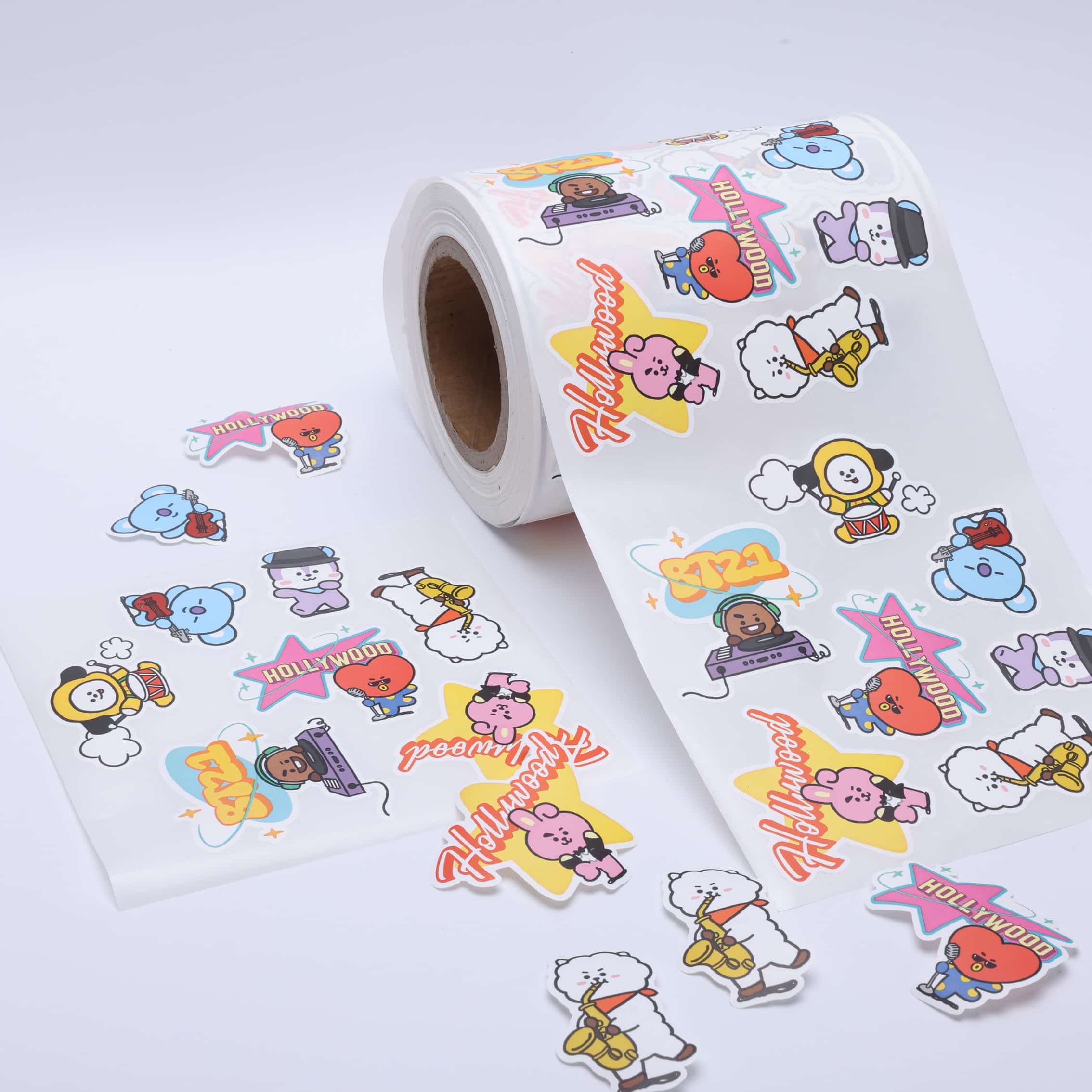
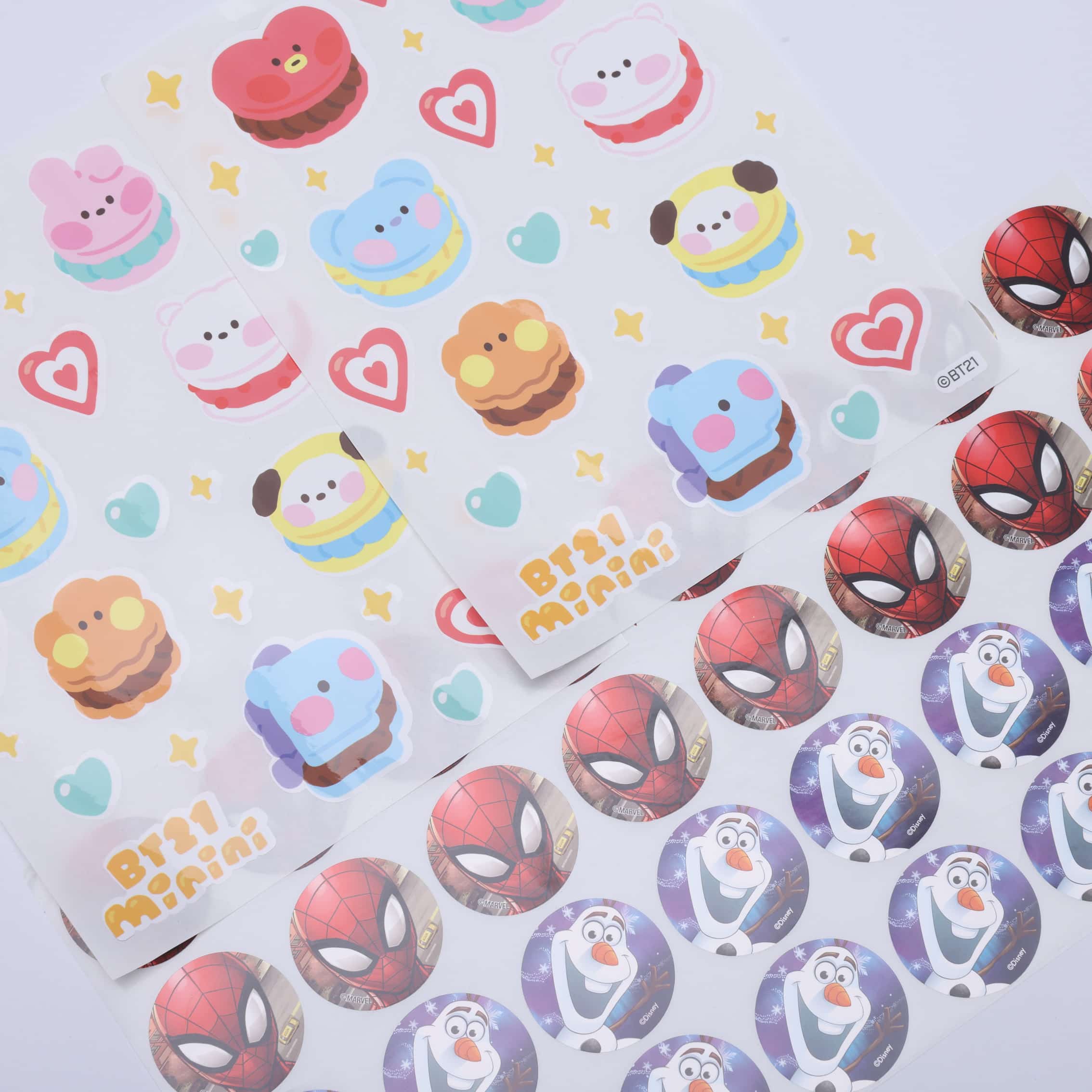
Kiss cutting allows individual labels to be cut into custom shapes while keeping the backing liner intact. This makes the labels easy to peel and helps maintain the structure of the label roll or sheet during handling, shipping, and application.
But what exactly is kiss cutting, and when should you use it?
What Is Kiss Cutting?
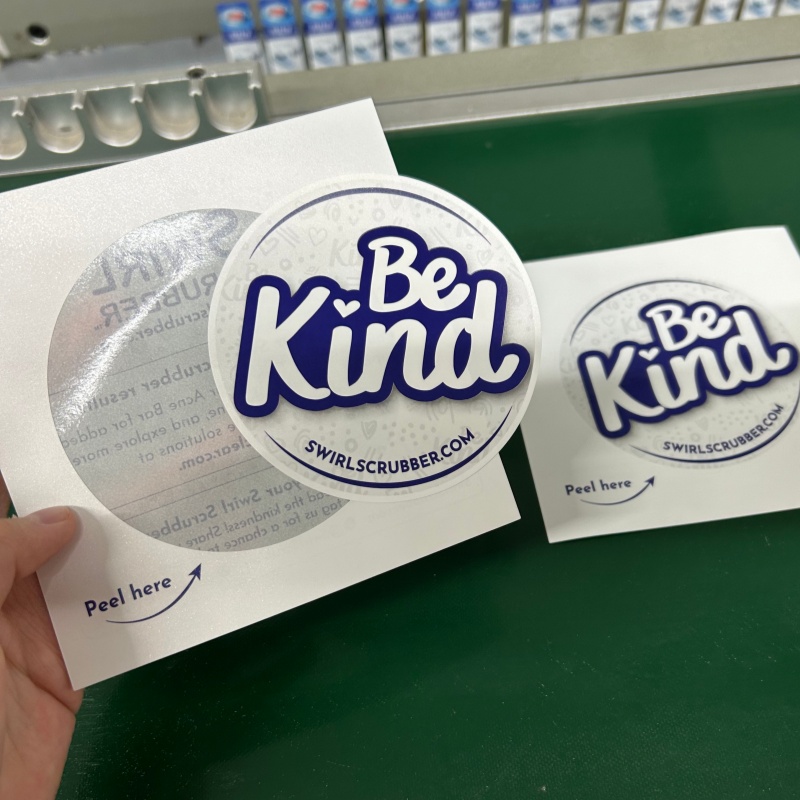
Kiss cutting is a label converting process in which the cutting blade cuts through the label material and adhesive layer but does not cut completely through the release liner.
The blade essentially "kisses" the liner without cutting through it.
As a result, the finished label remains attached to its backing material until it is peeled away.
A simplified structure looks like this:
Printed Label Material
↓
Adhesive
↓
Release Liner — remains uncut
This is different from a full die cut, where the cutting tool goes through both the label and the liner.
How Does Kiss Cutting Work?
The kiss-cutting process generally involves several steps.
Step 1: Prepare the Dieline
The desired label shape is created as a cutting line in the artwork or production file.
The shape can be:
The cutting line defines the final label shape.
Step 2: Print the Label
The artwork is printed onto the selected label material.
Depending on the project, the label can be produced using:
Additional processes such as lamination, varnishing, hot stamping, or other finishes can also be added before or after cutting, depending on the production process.
Step 3: Kiss Cut the Label
The cutting tool follows the designated cutting line and cuts through the label face material and adhesive.
The release liner remains intact.
This allows the labels to remain attached to one continuous backing material.
Step 4: Remove the Waste Material
For some label constructions, the excess material around the labels can be removed through a process called matrix stripping.
The individual labels remain on the liner while the unwanted surrounding material is removed.
This produces a clean, easy-to-use label roll or sheet.
Kiss Cut vs Die Cut
The main difference between kiss cutting and die cutting is the depth of the cut.
| Feature | Kiss Cut | Die Cut |
| Label material | Cut | Cut |
| Adhesive | Cut | Cut |
| Release liner | Not cut | Cut |
| Labels remain on liner | Yes | Usually no |
| Easy peeling | Yes | Yes |
| Suitable for rolls | Yes | Yes |
| Custom shapes | Yes | Yes |
| Typical use | Peelable labels and label rolls | Individual labels and specialty shapes |
The most important distinction is simple:
Kiss cut = the label is cut, but the liner remains intact.
Die cut = both the label and liner are cut through.
What Are the Benefits of Kiss Cutting?
1. Easy Label Peeling
Because the label is separated from the surrounding material but remains attached to the liner, users can easily peel each label when needed.
This is especially useful for manually applied labels and applications where labels need to remain organized during handling.
2. Custom Shapes
Kiss cutting allows labels to be produced in many different shapes.
Instead of using only standard rectangles, brands can create:
The cutting line can be designed according to the shape of the artwork and packaging.
3. Labels Stay Organized
The intact release liner keeps the labels together.
This is useful during:
For sheet-format labels, multiple labels can also remain neatly arranged on a common backing sheet.
4. Suitable for Roll Labels
Kiss cutting is commonly used for pressure-sensitive labels supplied on rolls.
The labels remain attached to the liner, allowing the roll to be wound and supplied for use with manual or automatic labeling equipment.
For automatic labeling, however, the complete construction still needs to be matched to the labeling machine, including:
The cutting method is therefore only one part of the overall label specification.
Where Are Kiss-Cut Labels Used?
Kiss cutting can be used for many types of custom labels.
Product Labels
Custom-shaped product labels can be kiss cut while remaining attached to the liner until application.
Promotional Labels
Brands can use custom-shaped labels for promotional campaigns, seasonal packaging, and marketing materials.
Logo Stickers
Company logos can be produced in custom shapes and supplied on sheets or rolls for easy peeling.
Barcode and Identification Labels
Kiss cutting can also be used for smaller identification labels where individual labels need to remain organized on a backing liner.
Packaging Labels
Food, beverage, cosmetics, household products, and other consumer packaging can use custom-cut pressure-sensitive labels.
Kiss Cutting for Automatic Labeling
For automatic labeling applications, kiss cutting is only effective when the label construction is correctly designed for the machine.
The following specifications should be confirmed before production:
For example, glass, PET, HDPE, PP, and other surfaces can have different adhesive requirements.
Kiss Cut or Die Cut: Which Should You Choose?
The right cutting method depends on how the labels will be supplied and used.
Choose Kiss Cutting when:
Consider Die Cutting when:
Neither method is automatically better. The choice depends on the label structure, application process, packaging design, quantity, and equipment.
What Information Should You Provide to a Label Manufacturer?
When requesting custom kiss-cut labels, providing the following information can help the manufacturer recommend the right production method:
If you already have a dieline, providing the original editable file can also help the printer check the cutting line and artwork before production.
Final Thoughts
Kiss cutting is a simple but important part of custom label production. By cutting through the label material while keeping the release liner intact, it creates peelable labels that are easy to handle, store, transport, and apply.
For custom product labels, the best cutting method depends on more than the label shape. Material, adhesive, liner, roll configuration, application method, and labeling equipment should all be considered together.
At Jinke Label, we provide customized label production with different materials, adhesives, printing methods, and finishing options. If you have a custom-shaped label or a roll-label project, we can review your artwork and application requirements and recommend a suitable cutting and label construction solution.
 +86 15805927008+86 15805928278
 Sales Executivelinda@jinkelabel.comSales Executiverosa@jinkelabel.comGeneral managerzane@jinkelabel.com
 No.99 Tongfu Road, Tongan district, Xiamen, China.

Our hours
Monday-Saturday: 8:00am-18:00pm